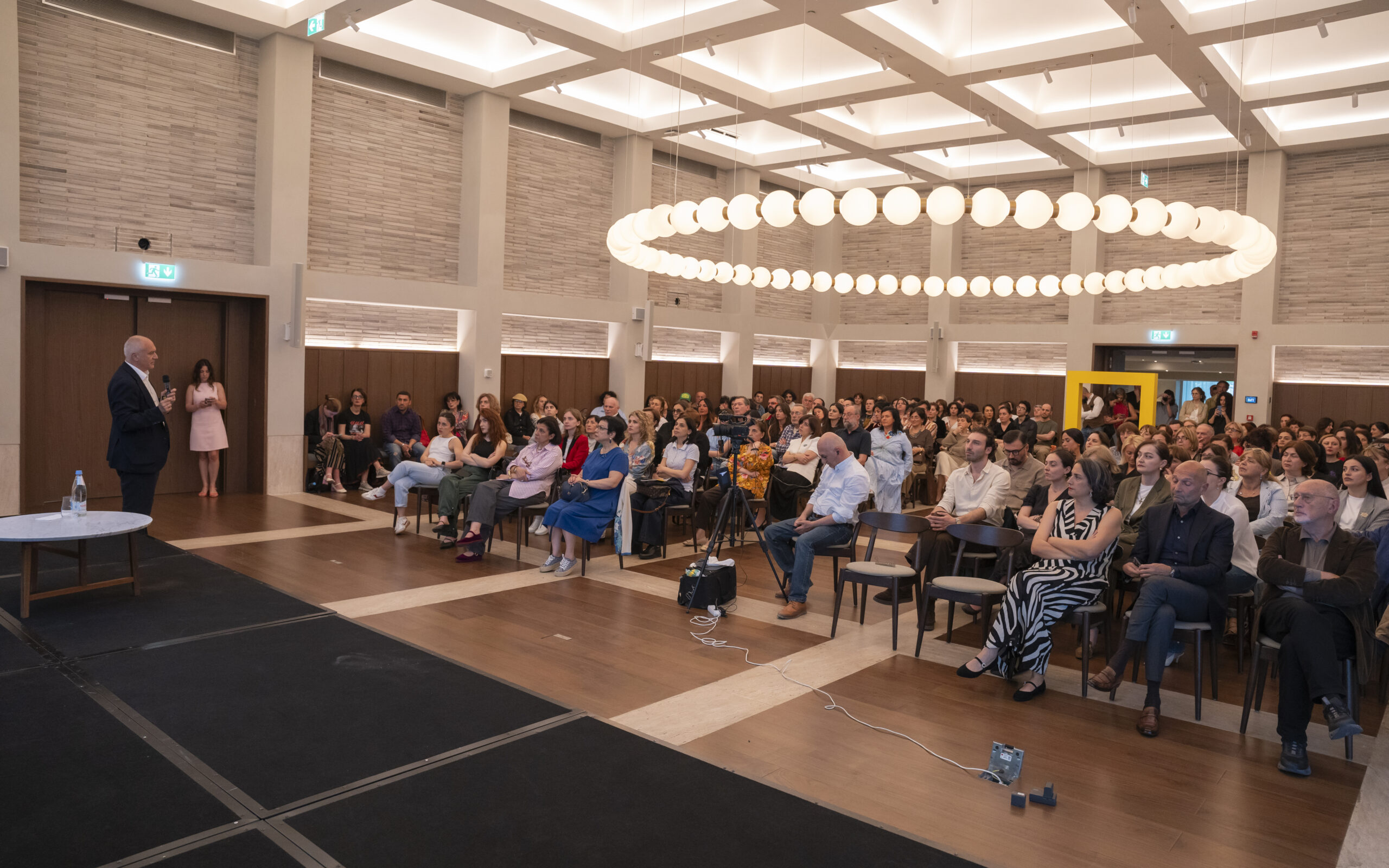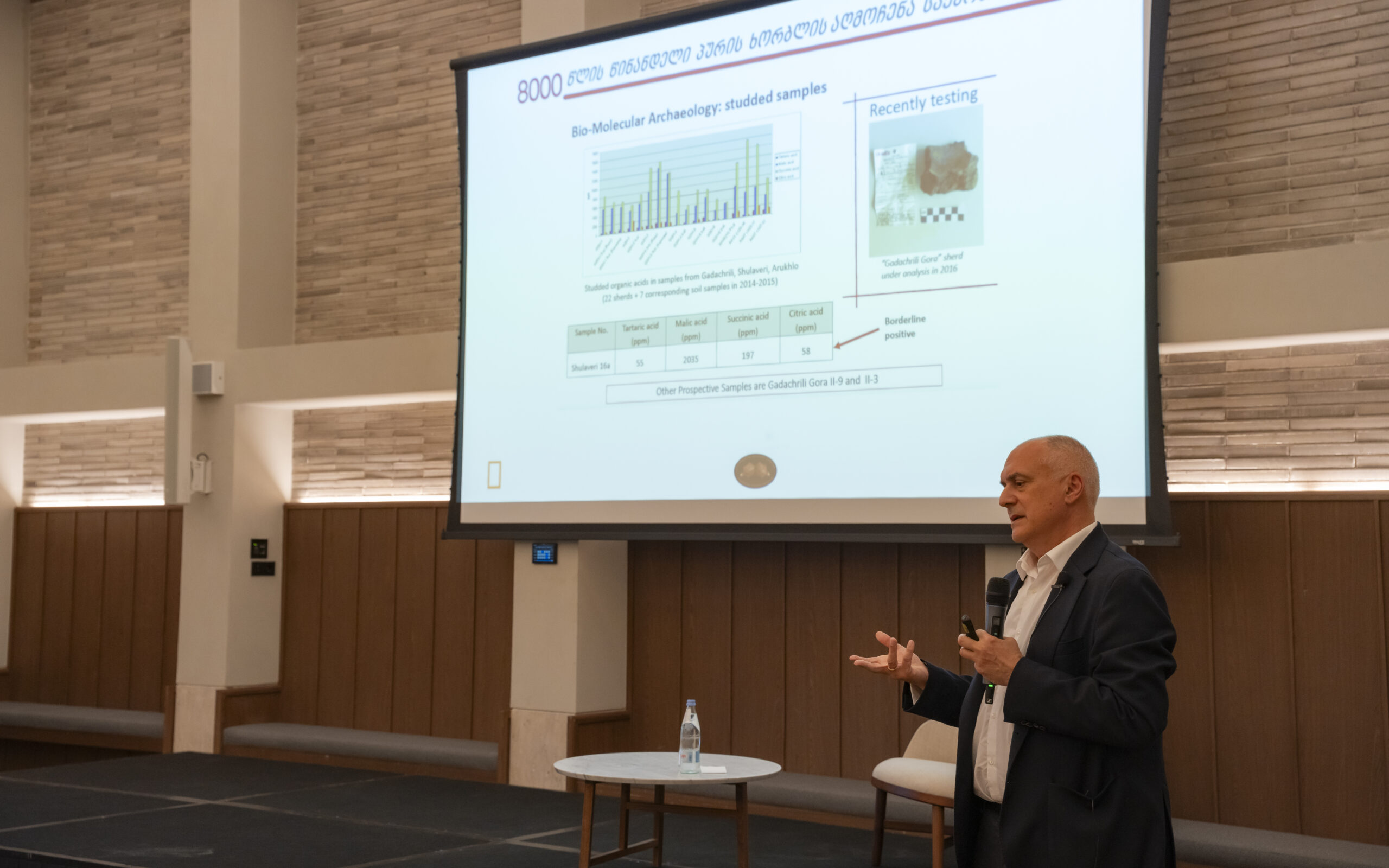


On June 5 of this year, Academia Europaea Tbilisi Hub, Georgian National Museum, and National Geographic Magazine – Georgia organized a public lecture by Academician David Lordkipanidze titled: “The ancient story of wine and wheat: innovations in early agriculture – new evidence from Georgia.”
The lecture focused on the results of the latest multidisciplinary research conducted on archaeological materials discovered in Georgia. According to these findings, Georgia represents not only the cradle of wine but also an independent center for the origin of bread wheat (Triticum aestivum).
The public is already familiar with the landmark study published in 2017 in Proceedings of the National Academy of Sciences (PNAS), which demonstrated that the tribes inhabiting present-day Georgia were producing wine as early as 6000–5800 BCE, approximately 8,000 years ago. Since then, Georgia has been widely recognized as the cradle of wine.
On April 27 of this year, the same journal published a new article entitled “An independent center for the origin of bread wheat in the neolithic period of Georgia in the South Caucasus.” The study confirms that Georgia represents an independent and, to date, the oldest documented center for the origin of bread wheat (Triticum aestivum), placing the origins of both, wine and bread wheat in Georgia approximately 8,000 years ago.
In both cases, the international multidisciplinary research projects were led by the Academic Director of AE Tbilisi Hub and the General Director of the Georgian National Museum, Academician David Lordkipanidze. Alongside Georgian scholars, researchers from leading scientific institutions in the United States, Canada, France, Italy, Denmark, and Israel participated in these studies.
During the June 5 lecture, Academician David Lordkipanidze presented the discoveries made at Gadachrili Gora and Shulaveris Gora in the Kvemo Kartli region. He emphasized that the scientific evidence obtained through these investigations has led to international recognition of Georgia as one of the world’s oldest centers of both wine and wheat culture.
“These archaeological sites are of exceptional importance. Evidence of bread wheat dating back 8,000 years, as well as traces of wine from the same period, have been confirmed here. The new discovery demonstrates how advanced our ancestors were—they were among the first farmers, and the legacy they left behind allows us to study what life was like 8,000 years ago,” he noted.
In addition to discussing the scientific significance of these discoveries, Academician David Lordkipanidze also explored their practical implications. He highlighted their potential as a powerful tool for positioning Georgia on the international stage, contributing to the country’s economic development and creating new opportunities for the growth of the tourism sector.
The public lecture concluded with a lively question-and-answer session, which once again demonstrated the importance of the ancient story of wine and bread to Georgian society.